
City dossier
Florence, Italy
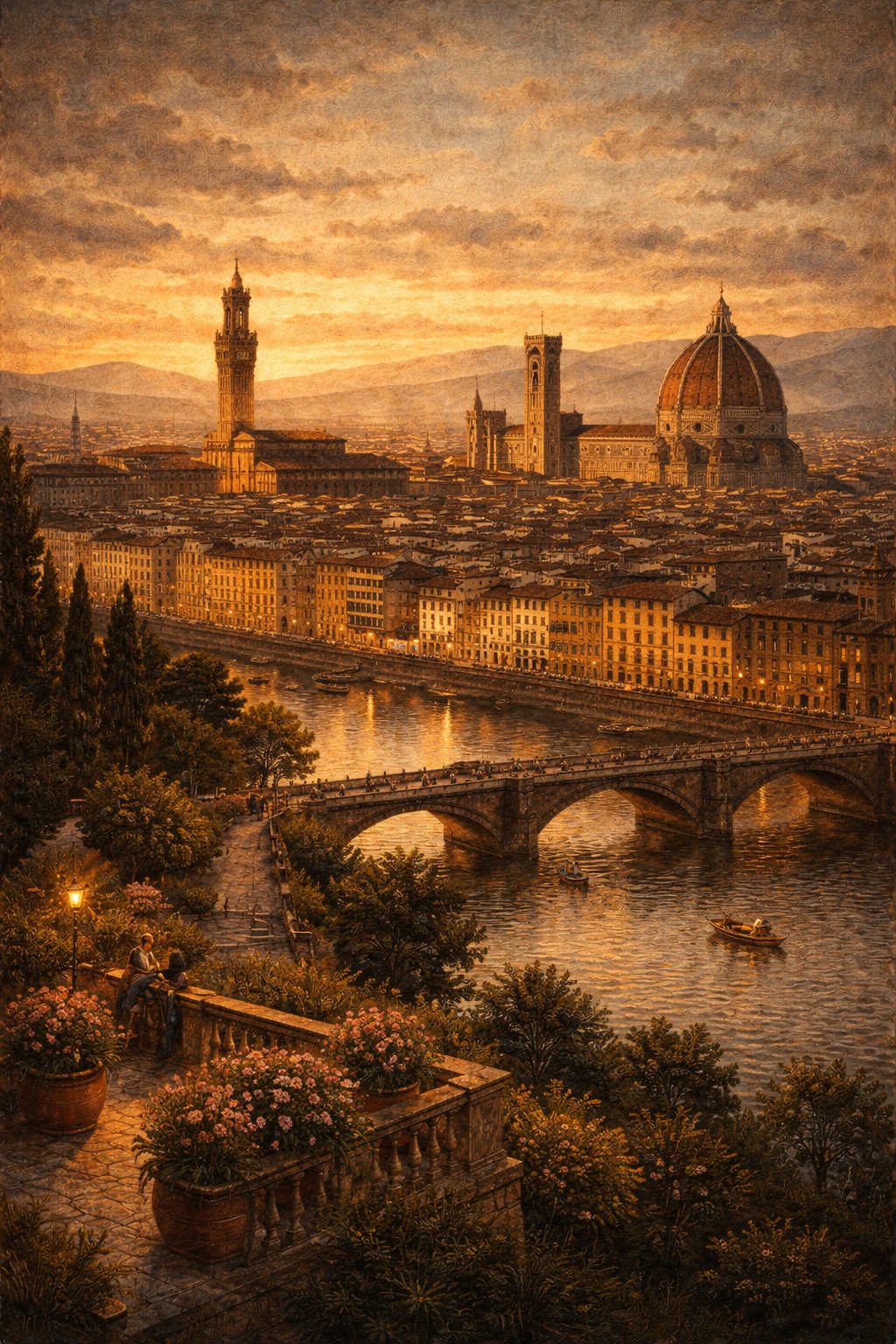
Florence, the cradle of the Renaissance, is essentially an open-air museum that charges admission in the form of cobblestone-induced blisters and Stendhal syndrome. This is the city where Michelangelo, Botticelli, and the Medicis conspired to invent modern art, and it hasn't stopped showing off since. Every church hides a masterpiece, every piazza frames a sculpture, and the lines for the Uffizi could qualify as performance art themselves. The local cuisine runs heavy on bistecca alla fiorentina, ribollita, and enough chianti to float a gondola—wait, wrong city, but the wine flows freely here too. The Tuscan heat in summer is unforgiving, the galleries are packed, and the marble floors echo with the footsteps of millions. The Renaissance masters understood the human body; they would understand your struggles.
Local motto
Florence: Where the Renaissance Still Hasn't Left
Highlights
Things not to miss
Curated essentials, minus the stiff whispers. We keep the jokes light and the brushstrokes heavy.
Gallerie degli Uffizi
The motherlode of Renaissance art, housing Botticelli's Birth of Venus, works by Leonardo, Michelangelo, and approximately every other master you've ever heard of. It's like the greatest hits album of Western civilization, displayed in a building designed by Vasari himself. The endless corridors can absorb hours and enormous crowds—and the sheer scale provides merciful distance between visitors who've overindulged in lampredotto from the tripe cart outside. The Medicis collected art and enemies; they would not judge your personal atmosphere.
Galleria dell'Accademia
Home to Michelangelo's David—17 feet of Carrara marble perfection that makes every other sculpture feel like it should try harder. It's like visiting a shrine where the god is uncomfortably attractive and everyone has their phone out. The single-masterpiece focus means crowds concentrate around David while the surrounding galleries empty out—strategic positioning for those who've tested the limits of Florentine cuisine and need some breathing room around lesser works.
Palazzo Pitti
A Renaissance palace so massive the Medicis bought it just to show off, now housing multiple museums and galleries across hundreds of rooms. It's like Versailles if Versailles had better taste and a Tuscan address. The Boboli Gardens behind provide acres of outdoor escape—cypress-lined paths and hidden grottos where visitors have been strategically retreating since the 16th century, for reasons both romantic and digestive.
Museo Nazionale del Bargello
A fortress-turned-museum packed with Renaissance sculpture, including Donatello's David and works by Michelangelo, Cellini, and Giambologna. It's like the Accademia's grittier, less crowded sibling—where the cognoscenti go while tourists queue elsewhere. The medieval courtyard and thick stone walls create acoustic conditions that have absorbed centuries of Florentine drama; whatever you're contributing barely registers against that historical baseline.
Museo dell'Opera del Duomo
The definitive collection of art from Florence's cathedral complex, including Ghiberti's original Gates of Paradise and Michelangelo's late Pietà. It's like the Duomo turned its pockets inside out and displayed everything magnificent it's been hoarding. The modern museum design provides excellent climate control and thoughtful spacing—a welcome respite from the summer heat and the consequences of that second bowl of pappa al pomodoro.
Museo di San Marco
A Dominican convent transformed into a museum, where Fra Angelico's luminous frescoes still grace the monks' cells like the world's holiest dorm decorations. It's like stepping into a medieval prayer, painted in gold and ultramarine. The monastic atmosphere demands contemplative silence—the kind of hush where a dropped coin echoes for eternity. The monks who lived here practiced extreme dietary discipline; honor their memory accordingly.
Palazzo Vecchio
Florence's medieval town hall, still functioning as city government while also serving as a museum dripping with Medici propaganda and Vasari frescoes. It's like visiting the White House if the White House were 700 years old and had secret passages. The Salone dei Cinquecento alone could host a thunderstorm—the massive hall's scale means sounds rise to the coffered ceiling and vanish into the Renaissance ether. The politicians who've worked here produced plenty of hot air; yours will blend right in.
Museo Galileo
A celebration of scientific instruments and Florentine innovation, including Galileo's actual telescopes and, yes, his preserved middle finger—because even in death, Galileo had something to say to his critics. It's like a cabinet of curiosities curated by geniuses. The focus on precision instruments creates an atmosphere of intellectual rigor; the scientists who made these tools understood gas laws and pressure systems intimately. They would appreciate your situation on a molecular level.
Palazzo Strozzi
A Renaissance palace turned contemporary exhibition space, where blockbuster shows bring modern and contemporary art into dialogue with Florence's past. It's like the old money decided to invite the new ideas over for dinner. The grand courtyard hosts installations and summer evening events with wine—because Florence understands that culture and chianti are natural partners, consequences notwithstanding. The thick palazzo walls have heard everything since 1489.
Cappelle Medicee
The Medici family mausoleum, where Michelangelo's allegorical sculptures of Dawn, Dusk, Day, and Night guard the tombs of dukes who funded the Renaissance. It's like visiting a royal crypt designed by the greatest artist who ever lived. The Chapel of the Princes is so encrusted with semi-precious stones it borders on obscene—Medici excess made eternal in marble and jasper. These princes ate, drank, and lived large; they would absolutely understand your post-pranzo predicament.