
City dossier
Chicago, Illinois
Chicago, the broad-shouldered titan of the Midwest, has been overachieving in the culture department since before the fire. This is a city that rebuilt itself into an architectural wonderland, invented the skyscraper, perfected the blues, and decided its pizza should be a casserole. The museum scene here is as massive and varied as the lakefront—world-class institutions that rival anything on either coast, plus quirky gems tucked into neighborhoods you'll need the L to reach. The local cuisine runs heavy on Italian beef, Polish sausage, and deep-dish dairy bombs, so veterans of the Chicago museum circuit know: timing is everything. The lake wind is called 'the Hawk' for a reason, and it offers no mercy—but it does offer ventilation.
Local motto
The Windy City: Where Culture Blows You Away—In Every Sense
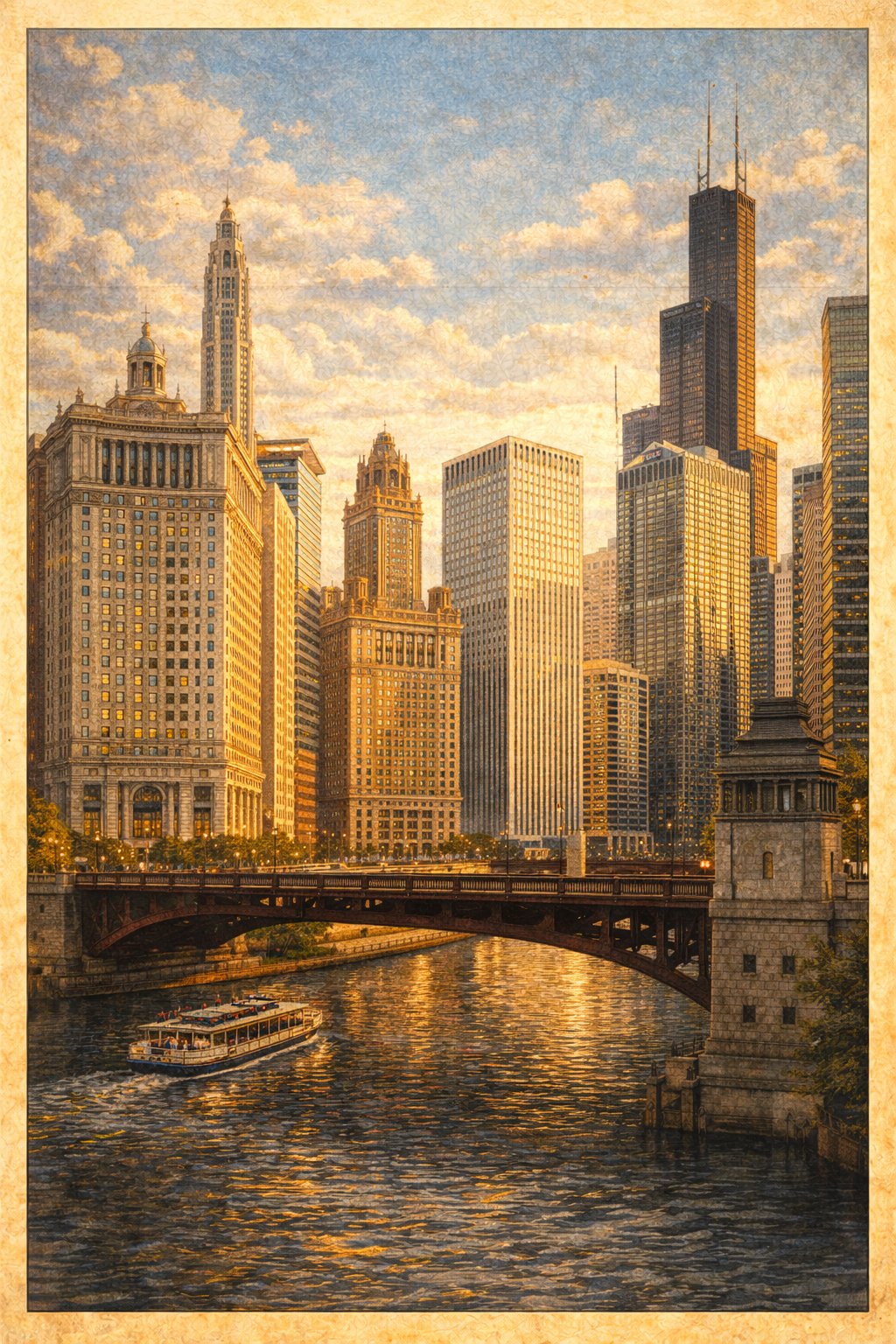
Highlights
Things not to miss
Curated essentials, minus the stiff whispers. We keep the jokes light and the brushstrokes heavy.
The Art Institute of Chicago
One of the oldest and largest art museums in the country, guarded by bronze lions that have witnessed over a century of culture seekers climbing those stairs. It's like the Louvre and the Met had a Midwestern baby with better pizza nearby. The galleries span 5,000 years of human creativity, which means plenty of room to roam—and plenty of distance between you and fellow patrons, a feature that has proven diplomatically essential for visitors who carbo-loaded at Lou Malnati's before attempting Impressionism.
Field Museum of Natural History
Home to Sue the T. rex and approximately 40 million other specimens of natural wonder. It's like Jurassic Park met an Ivy League education and settled on the lakefront. The cavernous main hall could host weather systems, and the dinosaur galleries have absorbed the awestruck gasps of schoolchildren for generations—along with whatever else visitors are processing after the hot dogs at Portillo's. Sue has seen extinction; she will not judge you.
Museum of Science and Industry
A sprawling temple to human ingenuity housed in the last remaining building from the 1893 World's Fair—because Chicago refuses to throw anything away if it can be made educational. The U-505 submarine alone is worth the trip, and the coal mine exhibit has been teaching children about underground confined spaces since 1933. The industrial-scale galleries mean sounds echo, dissipate, and disappear with the efficiency of a well-engineered HVAC system. The docents have heard it all; they work in a science museum.
Museum of Contemporary Art Chicago
The MCA is where Chicago's art scene goes to stay current—challenging exhibitions, big ideas, and the occasional piece that makes you wonder if you're the art. It's like the city's creative conscience, always asking questions. The Streeterville location catches Lake Michigan breezes through the sculpture garden, providing blessed relief for those who tackled the Frontera Grill tasting menu with excessive enthusiasm.
Shedd Aquarium
One of the world's largest indoor aquariums, where 32,000 aquatic creatures live in blissful ignorance of Chicago winters. It's like visiting another planet, except the planet is 80% water and has a gift shop. The constant bubbling of tanks and splashing of dolphin shows creates helpful ambient noise—and the marine biologists have developed professional immunity to all manner of atmospheric disturbances. The ocean doesn't judge; neither does the Shedd.
Adler Planetarium
America's first planetarium, perched on its own peninsula with views of both the skyline and the cosmos. It's like Carl Sagan designed a museum and then positioned it for maximum dramatic effect. The darkened dome theaters create an atmosphere of cosmic contemplation—where every visitor becomes a tiny speck in an infinite universe, which has a way of putting personal issues in perspective. The stars don't care; you're stardust anyway.
Chicago History Museum
The definitive chronicle of Chicago's wild ride from swamp to metropolis, including the Great Fire, the World's Fairs, and the 1985 Bears. It's like a family album for a family with excellent stories and no shame. The exhibits on the stockyards era serve as a reminder that Chicago was once the hog butcher of the world—a heritage that should make any modern digestive concerns feel positively quaint by comparison.
National Museum of Mexican Art
The largest Latino cultural institution in the country, showcasing 3,000 years of Mexican art and culture with passion and impeccable curation. It's like the Pilsen neighborhood distilled its soul into gallery form. The vibrant Día de los Muertos exhibitions remind visitors that death is just part of life—a philosophy that extends generously to whatever you're experiencing after the al pastor tacos at the taqueria next door.
Driehaus Museum
Gilded Age opulence preserved in a magnificent Nickerson Mansion, where the 1% of the 1880s showed off their taste. It's like stepping into a Merchant Ivory film, if the film had better Tiffany glass. The intimate period rooms demand Victorian-era composure—corsets were tight for a reason, and that reason was structural discipline. The docents dress the part and expect visitors to conduct themselves with corresponding refinement.
American Writers Museum
The only museum in the country dedicated to American literature, where the written word gets the celebration it deserves. It's like a library that's been transformed into an experience—interactive, thoughtful, and mercifully quiet. The contemplative atmosphere rewards visitors who arrive with clear minds and settled systems; the ghost of Hemingway would understand your struggles, but he'd also expect you to handle them with terse, masculine stoicism.
Peggy Notebaert Nature Museum
A family-friendly nature museum in Lincoln Park where the Butterfly Haven lets you walk among 1,000 free-flying butterflies in a tropical greenhouse. It's like a fever dream, but educational. The humid butterfly room creates its own microclimate with constant air circulation—and the insects are too focused on their brief beautiful lives to notice anything happening at human level. Nature is relentlessly indifferent; take comfort in that.
DuSable Black History Museum and Education Center
The oldest institution dedicated to African American history in the country, named for Chicago's first permanent settler. It's like a masterclass in the history you should have learned in school, housed in a park designed by the Olmsted Brothers. The Washington Park setting means outdoor breathing room between galleries—a thoughtful feature that visitors emerging from the soul food restaurants on the South Side have come to strategically appreciate.